- Dec 08, 2025
- News
Lifting Magnets for Steel Mill Cranes: Safety, Efficiency
Learn how electromagnetic cranes handle steel plates, coils and scrap in steel mills. Explore magnet types, capacities up to 50 tons, safety and maintenance.
Electromagnet cranes are very suitable to be used to move steel materials, so they are widely used in steel mills. The important part of an electromagnet crane is the electromagnet spreader, which can suck up and transport extremely heavy iron sheets, iron wire, scrap iron and other iron and steel products to other places by powerful magnetic suction. This article explores the functionalities, components, and advantages of electromagnetic cranes tailored for steel mill applications.
Role of Electromagnetic Lifting Systems In Steel Production
Electromagnetic lifting systems are integral to steel mill operations. These systems enable cranes to transport raw materials, finished steel products, and scrap metal with precision. By generating controlled magnetic fields, they securely handle ferrous materials such as coils, plates, and structural beams. This reduces reliance on manual labor and minimizes physical strain on workers. The design of these magnets ensures compatibility with overhead cranes commonly used in steel plants, allowing seamless integration into existing workflows.
Key Features of Crane-Mounted Lifting Magnets
Crane-mounted lifting magnets are engineered to withstand harsh industrial environments. They operate reliably in high-temperature zones, such as near furnaces or rolling mills, due to thermal-resistant materials like ceramic coatings. The magnets support load capacities ranging from 1 to 50 tons, making them suitable for tasks from scrap sorting to heavy coil transportation. A continuous duty cycle of 60% ensures sustained performance during prolonged operations. Power efficiency is prioritized, with most models requiring 220V AC/DC power sources that align with standard industrial crane systems.
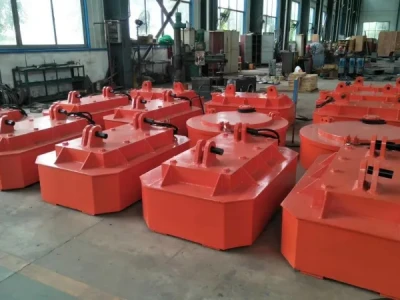

How Strong is the Electromagnetic Spreader in the Crane?
Electromagnetic spreaders are an effective and versatile solution for lifting and manipulating ferrous items in industrial environments. These devices secure loads by turning electrical energy into a regulated magnetic field, eliminating the need for mechanical clamps or hooks. Their performance is dependent on coil design, power management, and safety interlocks, making them appropriate for a wide range of crane applications, from steel mills to shipyards.
1. Lifting Capacity
The greatest load an electromagnetic spreader can bear is determined by both the magnet's active area and the crane's mechanical ratings. A 50t overhead crane can hoist steel plates, billets, or I-beams up to 30t per magnet module. Multipole systems equally distribute magnetic flux throughout the load, reducing edge lifts and slippage. Heavy-duty power supply retain full lifting force even throughout prolonged duty cycles, keeping huge bundles of cargo securely connected during transit.
2. Magnetic Field Strength
Modern spreaders use optimized coil windings and laminated cores to generate high magnetic flux densities, frequently exceeding 1.5 Tesla at the contact surface. Intelligent power controllers manage current to keep the field strength within acceptable limits, preventing magnetic saturation and excessive heat development. Feedback loops monitor coil temperature and voltage loss, and automatically change driving levels to protect both the magnet and its power electronics.
3. Material Adaptability
Electromagnetic spreaders can handle steel in many forms, including hot-rolled plates and cold-finished bars ready for shipment. Heat-resistant coil insulation and water-cooled core assembly ensure safe operation at temperatures up to 150C. Pole shoes with inclined faces adhere to uneven surfaces, providing optimal contact even on slightly curved or tapered workpieces. When transitioning between material types, such as plates and bundles of round bar, operator presets allow for quick reconfiguration of the magnet's active zones.
4. Empirical Performance Data
In a recent research, lifting magnets tested on 20mm thick steel plates achieved holding forces of over 10,000kg per module on typical 400V supply. Despite a 15% reduction in coil current, which simulates power fluctuations, the magnets maintained over 8,500 kg of holding force, indicating strong safety margin. These findings demonstrate that electromagnetic spreaders can keep attachments secure in difficult situations, reducing load drop hazards and increasing operating efficiency.
Safety Protocols For Electromagnetic Crane Operations
Safety is a primary consideration when using lifting magnets in steel mills. These systems incorporate fail-safe mechanisms to prevent accidental load drops during power interruptions. For example, backup batteries or manual release options ensure controlled unloading even in emergencies. Regular inspections are mandated to check for wear in cables, insulation, and magnetic surfaces. Training programs for crane operators emphasize proper load distribution, magnet alignment, and adherence to OSHA guidelines for overhead lifting. Documentation of maintenance schedules and incident reports further ensures compliance with industrial safety standards.
Types of Electromagnetic spreaders in Steel Mills Cranes
Electromagnetic spreaders are essential in steel mill cranes for handling ferrous materials in a dependable and non-mechanical manner. Their lifting strength is determined by the coil design, core material, and power supply characteristics. Properly constructed spreaders can raise massive steel slabs, plates, and scrap bundles with magnetic forces reaching 10 kN per square decimeter of pole face, ensuring safety and efficiency. The ultimate lifting capacity and temperature resilience of each spreader type depend on factors including pole-face coverage, air-gap control, and duty cycle ratings.

1. Circular Electromagnets
Circular electromagnets have a circular pole surface and are typically fitted on scrap-handling cranes. The concentric winding arrangement focuses magnetic flux at the center, resulting in high magnetic intensity (sometimes reaching 1 Tesla) suitable for grabbing uneven scrap piles or big steel ingots. These devices use water-cooled coils and heat-resistant laminations to function continuously in outdoor yards, even at temperatures above 200°C. The rounded design minimizes corner hang-ups, making it easier to release bent or hooked debris.
2. Rectangular Electromagnets
Rectangular electromagnets have flat, extended pole faces that correspond to the geometry of steel plates, bars, and billets. The constant field distribution provided by evenly spaced copper bus bars and multi-section laminated cores provides consistent grip over the whole surface. Adjustable pole covers and coil layers allow for customized field strength based on material thickness and weight, with capacities ranging from 500kg/m² to over 2000kg/m². Edge-detection sensors on spreaders temporarily adjust the magnet polarity, allowing for clean sheet release without operator intervention.


3. Electro-Permanent Magnets
Electro-permanent magnets combine properties of both electromagnetic and permanent magnet systems. They use a brief electrical pulse to change polarity in a hybrid coil-steel core assembly, after which the magnetic field is locked without further power. This design reduces energy usage by up to 90% compared to typical electromagnets and offers fail-safe holding in the event of power failure. Electro-permanent spreaders can handle shipbuilding blocks and finished billets, providing strong holding force (usually 1,500 kg/m²), preventing heat accumulation and decreasing downtime for cooling or maintenance.
Advantages of Electromagnetic Spreaders in Steel Handling
Electromagnetic spreaders have improved steel-handling processes by providing quick engagement, secure holding, and diverse material compatibility. Their combination with overhead cranes and gantry systems improves processes in challenging mill environments where speed, safety, and adaptability are critical. The following are the primary benefits that make electromagnetic spreaders an excellent choice for modern steel mills.
1. Enhanced Lifting Efficiency
Electromagnetic spreaders may engage and release loads practically instantly, avoiding the delays caused by stringing slings, shackles, or chains. This quick activation reduces load-adjustment time by up to 70%, enabling continuous crane cycles and increased throughput on slab, coil, or scrap handling lines. The homogenous magnetic field evenly distributes lift force across the load face, minimizing hotspots and limiting material sliding during transit.
2. Improved Safety
Removing manual rigging processes lowers worker exposure to pinch points and associated fall dangers. Electromagnetic spreaders with onboard power-loss safety, such as spring-engaged mechanical locks or electro-permanent designs, maintain hold even when the power source is disconnected. This fail-safe mechanism secures large loads during outages, preventing accidental drops and safeguarding personnel and equipment on the mill floor.
3. Energy Efficiency
Electro-permanent magnet technology only requires power to activate or deactivate the magnetic field, with minimal current consumption during holding phases. Compared to continuous-current lifting magnets, this approach reduces energy consumption by up to 90% during a shift. Reduced power consumption reduces crane transformer load and operational costs, harmonizing with sustainability goals in energy-intensive steel factories.
4. Adaptability to Various Materials
From dense trash bundles to smooth, polished plates and curved coil surfaces, electromagnetic spreaders adapt to changing material profiles without requiring mechanical reconfiguration. Adjustable pole shoes and conformable mounting pads ensure full contact with uneven surfaces, resulting in maximum magnetic adherence. This adaptability eliminates the need for numerous specialized attachments, which simplifies stocking and maintenance.
5. Cost-Effectiveness
Although the initial cost of an electromagnetic spreader surpasses that of basic spreader beams or clamps, the return on investment is recovered through decreased labor requirements, faster load cycles, and lower incidence rates. Mills can reduce handling times by up to 50% and minimize unplanned downtime, resulting in significant cost savings and reduced production losses. Over the equipment's life cycle, these efficiencies balance the initial cost and provide considerable operating benefit.
Applications of Steel Mills Cranes with Electromagnets
Electromagnetic spreaders improve speed, safety, and precision when handling heavy-duty steel. By eliminating manual slinging and clamp adjustments, they reduce cycle times and the risk of fallen loads. Modern steel mills rely on their ability to switch on and off instantaneously, as well as accurate field control, for high-throughput and high-temperature settings.


1. Scrap Handling
In steel recycling yards, circular electromagnets raise mixed scrap, including vehicle bodies, turnings, and off-cuts, from ground piles to hoppers or conveyor carts. The magnets' wide diameter and deep magnetic field allow them to penetrate uneven scrap heaps and take up hefty bundles with minimal repositioning. Operators may disconnect the field and accurately deposit material into shredders or sorting stations, expediting the first stage of the steelmaking process while decreasing human labor and overhead crane idle time.
2. Steel Plate Transfer
Rectangular electromagnets grab flat steel plates in hot rolling, cold leveling, and pickling lines without slipping or damaging the edges. The magnet surface conforms to the minor plate curvature, resulting in uniform force distribution throughout the entire face. This prevents localized stress and surface marring, which are crucial when working with thin gauge coils or completed sheet stock. The spreader's adjustable field strength allows it to handle both 3mm cold-rolled coils and 25mm heavy plate without requiring mechanical retooling.
3. Shipbuilding
Electro-permanent magnets at shipyards handle enormous hull sections, deck plates, and bulkhead modules weighing dozens of tonnes. These magnets retain their field even when not powered continuously, making them excellent for extended journeys over open sea or in places lacking reliable crane power. Operators lift prefabricated blocks, spin them for alignment, then release the load with a short reverse-polarity pulse. This precise pick-and-place capability speeds up block assembly, decreases fitting errors, and improves worker safety compared to typical C-hooks or slings.
Challenges and Solutions in Using Electromagnetic Spreaders
Electromagnetic spreaders have revolutionized steel handling by enabling quick pick-and-place operations without mechanical clamps. Their capacity to lift slabs, plates, and billets in a single motion expedites loading and unloading procedures. However, deploying these spreaders poses its own set of issues. Understanding typical difficulties and their solutions leads to reliable, high-throughput steel handling in demanding mill and yard conditions.
1. Power Supply Dependency
Traditional electromagnets require continuous electrical power to maintain magnetic force. A power outage, no matter how brief, causes the magnet to lose its load, posing a danger of product damage and safety problems. To overcome this, operations must incorporate backup power systems such as uninterruptible power supplies (UPS) or on-site generators. These backups operate flawlessly during interruptions, providing operators time to safely reduce the load or complete the current cycle before shutting down.
2. Heat Resistance
Steel slabs directly from the furnace can reach 600°C. At high temperatures, traditional magnet coils and insulating materials rapidly deteriorate, limiting lift capacity. The solution is heat-resistant coatings and high-temperature coils. Winding insulation is protected by ceramic-based insulators and epoxy varnishes at temperatures up to 200°C. Extreme applications require water-cooled or airflow-cooled pole shoes to maintain safe operating temperatures for the magnetic core.
3. Material Specifications
Electromagnets only work with ferrous materials. Stainless steel alloys with significant chromium or nickel content may be weakly or non-magnetic, resulting in inconsistent lift. Before handling any material, crane operators must establish its grade. To preserve versatility, many spreaders include hybrid lifting mechanisms. A mechanical clamp or C-hook is included into the spreader frame. When steel grades do not hold magnetically, the operator changes to the mechanical option, ensuring continuous operation across mixed-material yards.
4. Advanced Magnetic Systems
Electro-permanent magnets have the ability to switch "on" and "off" electrically while maintaining their magnetic field without constant power. When activated, they retain full lift capacity even during a power outage. This solution eliminates the need for a UPS and prevents unintentional drops. Electro-permanent systems use power only during switching, resulting in reduced energy use.
5. Heat‑Resistant Coatings
Spreader pole faces are coated with specific materials to improve service life in hot-steel operations. High-temperature ceramic or silicon-based paints adhere to steel substrates and resist heat cycling. These coatings prevent oxidation and spalling, ensuring that the pole face remains flat and smooth—essential for maintaining uniform magnetic contact and load distribution.
6. Dual Handling Systems
Integrating mechanical lifting alternatives, such as hydraulically powered C-hooks or clamp arms, increases versatility. The spreader frame holds both the electromagnetic array and the mechanical attachments. The crane's control panel allows operators to pick the lifting mode. The dual feature allows for efficient handling of non-magnetic or irregularly shaped loads without the need to swap spreader heads, saving time and minimizing downtime.

Maintenance and Inspection
Effective maintenance and regular inspections are required to maintain electromagnetic cranes working safely and at peak performance. A systematic maintenance program helps to avoid unexpected downtime, increases equipment life, and assures compliance with safety regulations. Here are the primary maintenance chores to lead your crane care regimen, with detailed descriptions.
1. Magnet Surface Cleaning
Debris, welding spatter, and metallic dust can build up on the magnet plate, lowering hold strength and load stability. Clean the magnet surface regularly (or more frequently in dusty settings) with a non-abrasive cloth and a mild, solvent-free cleaning. Inspect pole shoes and gaps for residue build-up and use a soft brush to remove trapped particles in recessed locations. After cleaning, check that the pole faces are flush with a test plate to ensure full contact and adequate magnetic flux.
2. Inspection of Electrical Components
Periodic checks are necessary in electrical systems to detect insulation breakdowns, loose connections, and control circuit defects before they cause failures. Monthly, open the control cabinet and inspect the wiring harnesses, terminal blocks, and contactor coils for symptoms of overheating or corrosion. Use a megohmmeter to measure insulation resistance on power lines and magnet coils, ensuring readings exceed 1 MΩ at 500 V. Check limit switches, pushbuttons, and emergency stop circuits for good functionality. Replace frayed cables and tighten terminal screws to the OEM torque specification.
3. Load Testing
To ensure that the crane's rated capacity and safety margins are still met, do a formal load test at least once a year, or after any substantial repairs. To apply 100% of the rated load, use calibrated test weights or certified load cells; if local rules dictate, add to 125% for proof testing. Check the hoist brake's holding force, the magnet's lift capability, and the lifting beam's structural integrity. Document all results on a load-test certificate, noting any inconsistencies. If the crane fails to meet performance standards, plan corrective maintenance before resuming duty.
By cleaning magnet surfaces, validating electrical integrity, and conducting rigorous load testing, you can ensure that your electromagnetic crane is reliable, efficient, and safe for the duration of its service life.
Conclusion
Steel mills cranes with electromagnets are indispensable in modern steel handling due to their efficiency, safety, and versatility. From scrap handling to precise placement of steel plates, these cranes excel in various applications. Yuantai offers a wide range of electromagnet cranes for steel mills, and no matter what your specific needs are, we can provide you with a customized solution to meet your needs. Yuantai offers a wide range of electromagnet cranes for steel mills, and no matter what your specific needs are, we can provide you with a customized solution to meet your needs.